
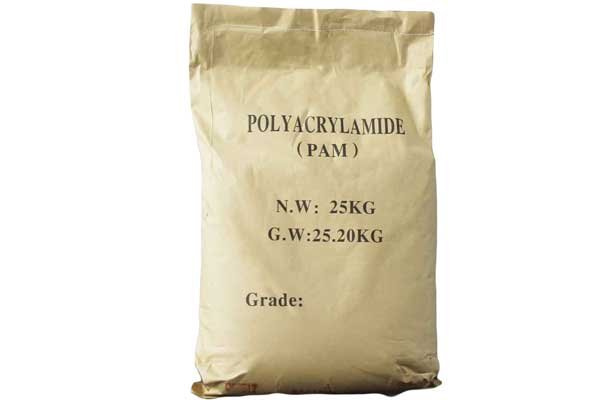
Description
Solubility in water: upon rapid mechanical stirring, polyacrylamide is easily soluble in cold water form a transparent adhesive solution. Increasing the temperature does not affect its solubility and only affects its dissolution when the concentration is increased to a high viscosity.
Solubility in Other Solvents: polyacrylamide has a over 1% solubility in solvents such as glycerol, ethylene glycol, formaldehyde, acetic acid and lactic acid (these materials may be used as the plasticizer for laminating polyacrylamide). However, it can only be swelled without being dissolved in solvents such as propionic acid, propylene glycol; it is also not soluble in solvent such as acetone and hexane.
Stability: polyacrylamide has a moderate hygroscopic property, if not exposed to position of high temperatures, the powdered polyacrylamide can subject to long-term storage. For liquid polyacrylamide, when its concentration is greater than 17%, it can be stored for more than one year with no significant change in the solution viscosity. In the pH range of 3 to 9, it can maintain a good degree of stability; at high pH, the viscosity will be increased gradually.
Miscibility: in generally used concentration, polyacrylamide has miscibility with most water-soluble natural or synthetic resins, latex systems, and most of the salts. Polyacrylamide can also quickly miscible with non-ionic, cationic and anionic surfactants, though with certain surfactants affecting the viscosity.
Viscosity: The viscosity of polyacrylamide solution has a linear correlation with its molecular weight; in addition, the higher the temperature, the lower the viscosity.
Reviews
There are no reviews yet.