
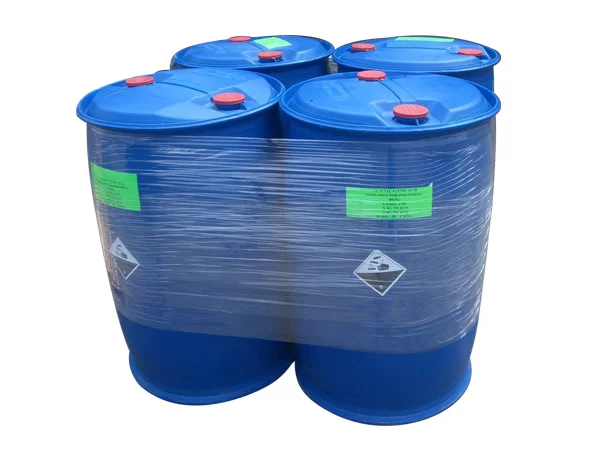
Description
Rubber industry: natural rubber coagulant.
Other: It can also manufacturePharmaceutical industry: caffeine, analgin, aminopyrine, aminophylline, theobromine borneol, vitamin B1, metronidazole, and mebendazole.
Pesticide industry: triadimefon, triadimefon, tricyclazole, triazole, triazophos, paclobutrazol, uniconazole, insecticides, dicofol, etc.
Chemical industry: calcium formate, sodium formate, ammonium formate, potassium formate, ethyl formate, barium formate, dimethylformamide, formamide, rubber antioxidant, pentaerythritol, neopentyl glycol, epoxy soybean oil, epoxy soybean oleate octyl ester, terpene chloride, paint remover, phenolic resin, pickled steel plate, etc.
Leather industry: Tanning agents, deliminators, and neutralizers for leather.
printing and dyeing mordants, dyeing agents, treatment agents, plasticizers for fibers and paper, food preservation, and animal feed additives.
Produce CO. Chemical formula: HCOOH=(catalyzed by concentrated H2SO4) Heating=CO+H2O
Reducing agent. Determination of arsenic, bismuth, aluminum, copper, gold, indium, iron, lead, manganese, mercury, molybdenum, silver, and zinc. Verify cerium, rhenium, and tungsten. Inspect aromatic primary and secondary amines. Solvent for determining relative molecular weight and crystallization. Determination of methoxy groups. Used as a fixative in microscopic analysis. Manufacturing formates.
Formic acid and its aqueous solution can dissolve many metals, metal oxides, hydroxides, and salts, and the resulting formates can be dissolved in water, making them suitable as chemical cleaning agents. Formic acid does not contain chloride ions and can be used for cleaning equipment containing stainless steel materials.

Reviews
There are no reviews yet.